
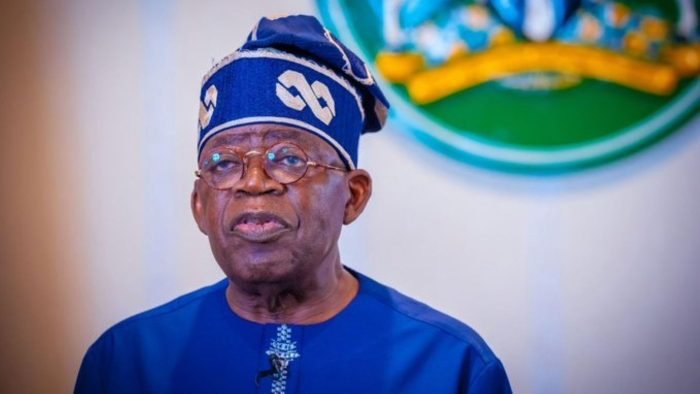
President Bola Tinubu has formally put months of speculation to rest, retaining Vice President Kashim Shettima as his running mate for the 2027 presidential election. The All Progressives Congress submitted the pair’s nomination forms to the Independent National Electoral Commission on Friday, confirming that Nigeria’s ruling party will once again run a same-faith ticket — and reopening a debate that has divided political and religious leaders since 2023.
The Announcement
The APC presented Tinubu and Shettima’s nomination documents to National Chairman Prof. Nentawe Yilwatda in Abuja, just ahead of INEC’s submission deadline. Imo State Governor Hope Uzodimma, speaking on behalf of APC governors, reaffirmed the party’s backing for the ticket, while Yilwatda described the decision as a reflection of confidence from the party’s more than 12 million members.
For weeks beforehand, there had been genuine uncertainty over whether Tinubu might replace Shettima with a northern Christian to broaden the ticket’s religious appeal. That question is now settled — and reactions have split sharply along familiar lines.
Christian and Middle Belt Groups Push Back
Criticism has come fastest and loudest from Christian and Middle Belt voices. Niger State APC chieftain Jonathan Vatsa called the decision a “direct insult” to Christians, arguing that repeating the 2023 arrangement ignores how different the political climate is now, particularly amid international scrutiny of Nigeria’s treatment of Christians. He warned that without a different path to victory, the choice could carry serious consequences for the party.
The Middle Belt Forum echoed that disappointment, with spokesperson Luka Binniyat describing the retained ticket as a missed opportunity that overlooks the region’s political weight — and noted, pointedly, that it excludes even Muslims from the Middle Belt. The forum stopped short of declaring a political position, saying its stance would be shaped later by its leadership bodies.
The Northern Christian Elders Forum was more biting in tone. Its chairman, Elder Sunday Oibe, responded with a rhetorical jab, suggesting Nigerians would render their verdict on the arrangement in due course.
Defenders Call It a Winning Formula
Not everyone sees the decision as a liability. A Kano-based political analyst, Aminu Rabiu, argued the ticket signals unity and continuity within the APC and remains electorally sound, contending that dropping Shettima would have been politically damaging for the party. He maintains the same-faith pairing still carries real vote-getting power in both the north and south.
A law professor and retired military officer, Major Bello Magaji, went further, calling the retention “strategic and commendable,” arguing that changing the ticket mid-stream could disrupt the reforms already underway in the economy and security sector.
The North-Central APC Forum has been among the most vocal defenders, previously warning that Tinubu could lose the bulk of northern Muslim votes if he dropped Shettima, and insisting the ticket does not amount to marginalizing Christians. The forum argues that the loudest critics were never Tinubu supporters to begin with, and that key government positions already held by Middle Belt Christians will keep the region in the APC’s column regardless.
A Split Even Among Ordinary Voters
The divide extends beyond political elites. A young voter in Jigawa State, Rabiu Muhammad, said the decision would directly shape his vote in 2027, arguing that a ticket which doesn’t reflect Nigeria’s religious and regional diversity sends the wrong signal about fair representation.
Other analysts suggest the political sting of the arrangement may be softening. Some observers believe opposition figures like Peter Obi will draw a smaller protest vote over the issue this time, as more Christians report benefiting from the Tinubu administration’s policies — potentially blunting the ticket’s downside compared to 2023.
What Comes Next
With the nomination now filed, the composition of the ticket is no longer in question — but the argument over what it means for 2027 is far from settled. Supporters frame it as continuity and a tested formula; critics frame it as an unresolved fairness problem that could cost the APC support in Christian and Middle Belt communities. As campaigning intensifies, both sides agree on one thing: how Nigerians ultimately respond at the ballot box will be the real test.